The Many Faces of Carahil
April 20, 2013

“Carahil”, by Felipe Montecinos
There are several aspects of the character you may or may not be aware of:
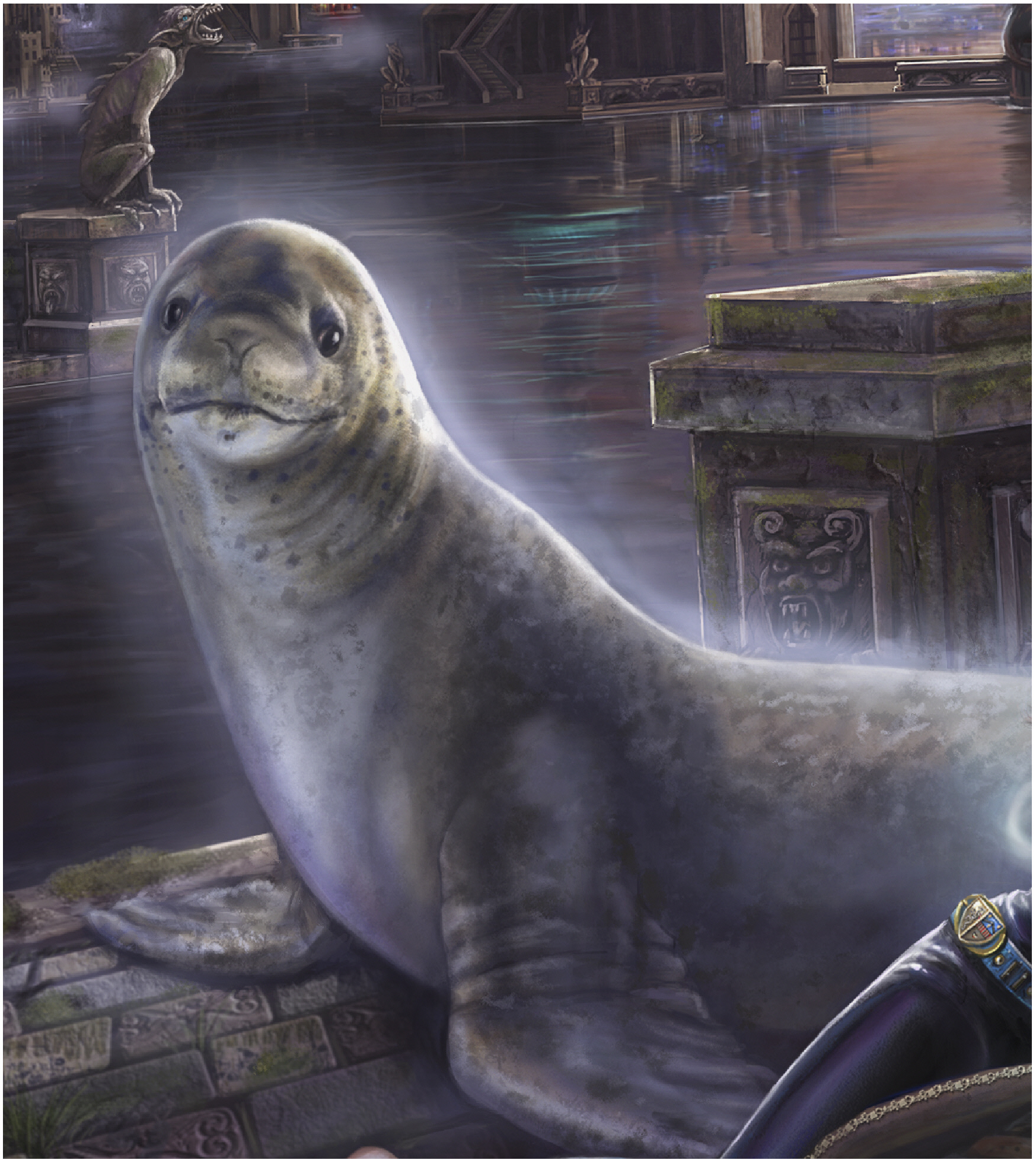
Carahil 1 (Carol Phillips)
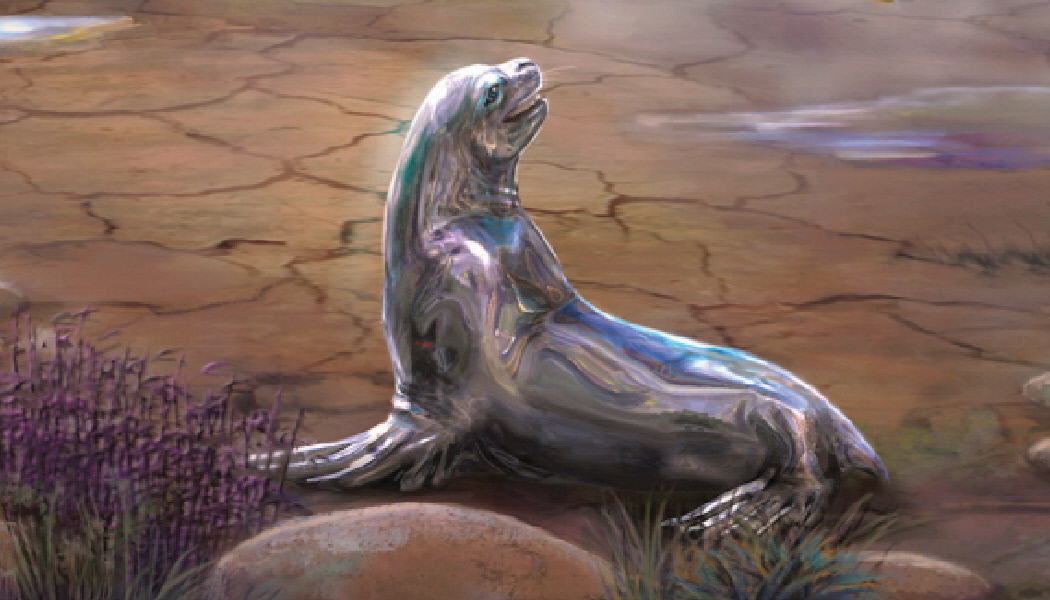
Carahil 2 (Carol Phillips)

Carahil, as a human, with a pregnant Mabsornath (Carol Phillips)
Lady Poe was delighted with Carahil and considered him to be her first child. She created a number of medallions which would summon carahil when needed. Carahil 2 brimmed with power. He loved rescuing small animals and nursing them back to health. He also had a love of jokes and pranks. His favorite prank was stealing gowns from Countess Sygillis’ wardrobe and hanging them from a flagpole.
Carahil’s abilities have never been fully tapped or displayed. He is powerful enough to be invited to join the Celestial Arborium, an organization of gods seeking to maintain Universal Balance. Carahil follows the rules of Universal law preventing him from using his abilities to their full extent. He is known to change his shape at will, become larger or smaller, use TK, control the weather, control animals, travel vast distances in moments, become ethereal or astral, ward away evil and destroy Shadow tech.
XANDARR:
Carahil took an active role in saving the Planet Xandarr from a Black Hat attack. Ever after Carahil was considered the protective patron god of the planet.
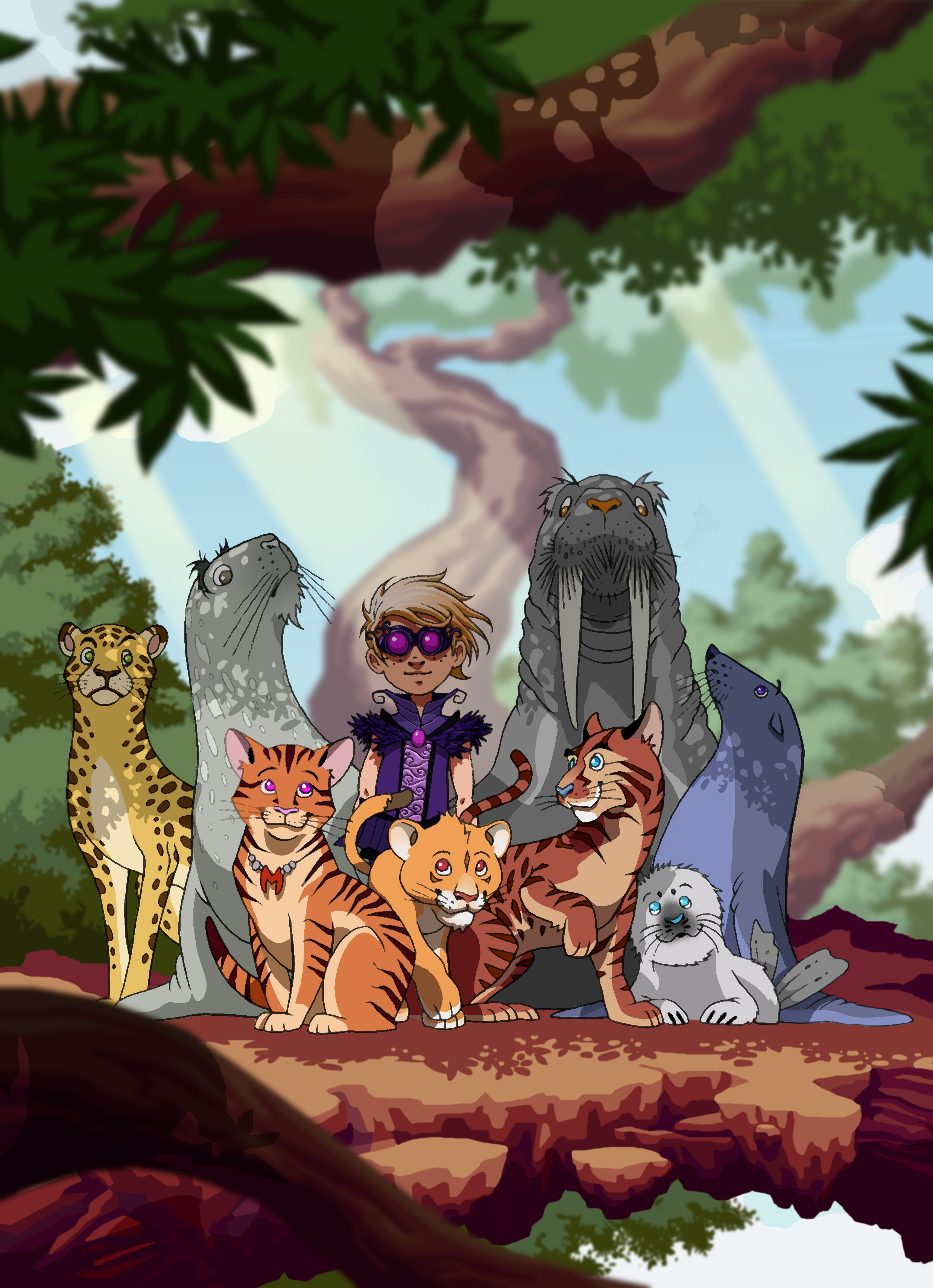
Carahil and his family (Felipe Montecinos)
CARAHIL’S TEMPLES:
There are a number of mystical places associated with Carahil. The places are usually fun and filled with Carahil’s light. The Mystery Library in Castle Blanchefort, 1000 Carahil Park and its Gift Shop on Xandarr have both been confirmed as temples dedicated to Carahil.
There is another place associated with Carahil that is very frightening and dangerous, the Cathedral of Bone and Wire where a hideous demonic beast resides. How Carahil could be associated with such a dark place is not currently known.
copyright 2013, Ren Garcia, Carol phillips and Felipe Montecinos
Sands of the Solar Empire Free Giveaway on Amazon
April 8, 2013

Click on the pic to go to Amazon
Monday, April 8th and Tuesday, April 9th the Sands ebook is totally free. Click on the Sands cover picture to go direct to Amazon.
Here’s the Blurb for the Book:
GET THE BRANDY TO BAZZ . . .
That’s all Paymaster Stenstrom, the Lord of Belmont-South Tyrol, has to do and the old warbird Seeker is his. He has dreamed of captaining a Fleet ship his entire life.
Little does Paymaster Stenstrom realize that he is in the grip of an old Vendetta and the short trip to Bazz might very well be his last.
Faced with a dead ship and a lost crew, Paymaster Stenstrom finds help in the strangest places: the thief Marine and the milquetoast young man from the Admiral’s office, and, though he just became acquainted with these two strangers, he discovers they have been influencing each other’s lives for a very long time.
Something sinister hovers over Paymaster Stenstrom and his two new friends, something they are only now becoming aware of. The SANDS OF THE SOLAR EMPIRE stretch out before them in an endless gulf brimming with the unknown. Can a masked Paymaster, a thief, a coward and a once great warbird face what awaits them?

Click on the pic to go to Amazon
Here the blurb:
THERE’S A WHOLE LOT OF BAD BETWEEN KANA AND BAZZ . . . That’s what they say on Bazz, that the “Deep Sea”, the open space between the two planets, is cursed and full of bad dreams—but nobody ever listens to people from Bazz, do they? Paymaster Stenstrom, Private Taara and Lord A-Ram struggle to navigate the Seeker, an old warbird, through the shipping lanes to Bazz. If the Paymaster can’t get to Bazz with his cargo of brandy, he loses the ship and will probably end up in jail as well. Jail? If only . . . The three adventurers are about to discover the old farfetched mariner stories are very real and that the Devil himself waits for the unwary in dark places where there is no help. The Circle closes in on Stenstrom, Taara and A-Ram, and its judgment for them is far worse than any jail cell. The Seeker is about of become just another ship that set sail from safe shores and was never heard from again, unless . . . The Belmont Saga concludes in this heartbreaking and action-packed tale of friendship and dedication, of vile evil and hopeless terror, and that sometimes help for those gone astray comes from the most unlikely of places.
See you there!!
copyright 2013, Ren Garcia
Against the Druries available on Amazon
March 14, 2013
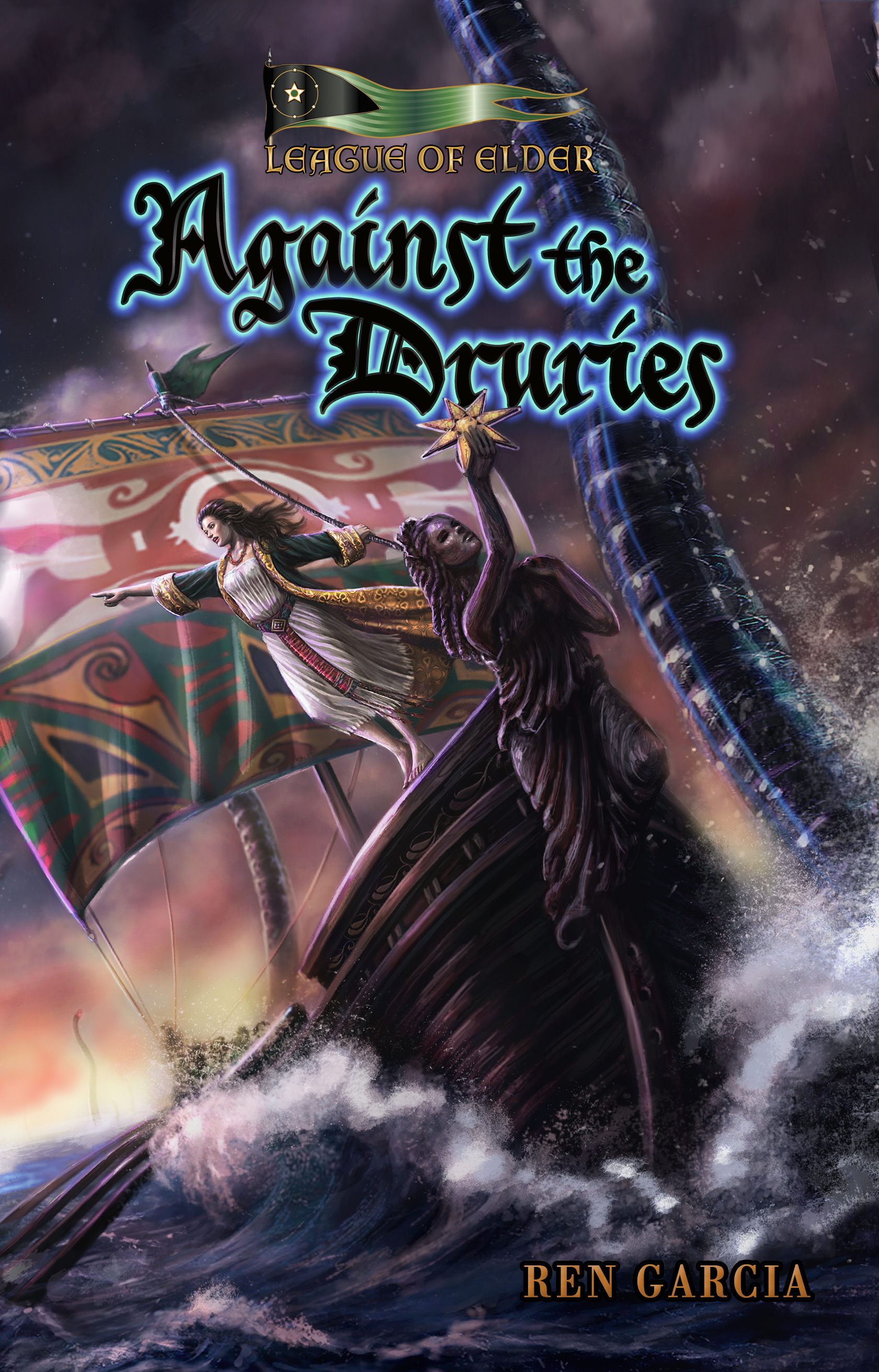
Finally, LOE Book VII: Against the Druries is out!!
This book is the triumphant conclusion to the “Belmont Saga” and all of the concepts and plot threads introduced in “Sands” are dealt with and answered in detail.
An author naturally puts a great deal of themself into any particular work–with this book it’s even more so. I normally try to keep myself out of the proceedings, but this book encompasses many of my hopes and my dreams, my fears and my wants. There is a great deal of friendship and discovered love in this book, and there is vile cruelty too. This book is me with the curtain pulled aside, and it’s my favorite so far of the series.
LoE Book VII: Against the Druries , from Loconeal Publishing, is available on Amazon.com
copyright 2013, Ren Garcia
Age and the League of Elder
March 4, 2013
One of the more confusing aspects of the League of Elder concerns age and the process of aging. How do people age in the League? Why don’t the characters get old? How long do they live? Are they Immortal??
Let’s take a look.

Captain Davage and Countess Sygillis, both over 100 years old (Eve Ventrue)
A little history. Way back in the CX Time Epoch is when the people who would one day become the League were given the Gift of Youth and Health. The 25 god-like Elders, whom they faithfully served, decided to reward their loyal servants and engineered the ravages of old age and infirmity out of them. The effects of this engineering essentially granted them the energy of youth throughout their lives and disease became a thing of the past, such that knowledge of the medical arts was no longer considered necessary and was therefore lost to the ages, not to be rediscovered until the EX Time Epoch by the Hospitalers.
Here are a few facts:
The average Elder (or Leaguer) lives to be 220 years old. For example, Captain Davage is about 120 years old, while his wife, Countess Sygillis, is well over 200, though her exact age is unknown.
THE PUFFIES and TWEENERS:
One of the side-effects of their condition is a very malformed and somewhat grotesque youth. Children 15 and under are often rather malformed and puffy in appearance. Those with the Gifts of the Mind suffer from it the most, while the Browns hardly have it at all. Lady Kilos of Blanchefort is a well-known sufferer of The Puffies, having it well into her twenties, while her elder brother, Lord Kabyl, never had it at all. The Puffies normally clear up by their mid-20’s.

A-Ram and Alesta (Eve Ventrue)
THE LENTICONS:
There are some in the League who, through a malady of the flesh, grow old and only live to be about 100. They are known as Lenticons and are generally considered products of bad breeding. The Esther House of Milke is known to be thusly afflicted.

Monamas, like Lady Sammidoran, are not engineered to remain young, and age normally as they get older. (Eve Ventrue)
THE TIME OF GOODBYES
One severe drawback of their perpetually young bodies is that the Leaguers are never quite certain when they will die. Death strikes without warning once a certain age has been passed. A usual tradition is for people turning 220 to perform the Time of Goodbyes ritual to get their affairs in order and bid their loved ones farewell, just in case they die in the night. Lady Poe of Blanchefort is well past her Time of Goodbyes, her long life possibly due to her status as a Shadow tech Female (see below).
IMMORTALITY:
It has been long suspected that the Elders not only made the Leaguers young and healthy, they made them immortal as well. The Hertogs, a group of disaffected scholars and detractors of the Sisterhood of Light, often make that claim. They maintain that the Sisters are actually doing something behind the scenes to suppress their immortality. That argument has yet to be fully proved. The Hertogs make it their business to track down those they believe are Immortals and collect them, so to speak. Their code-name for a suspected Immortal is: Rundlepharge. The Xaphan tyrant Queen Ghome of Trimble is a suspected Immortal.
Immortality aside, there are certain variables which appear to grant certain Leaguers exceptional long life. Shadow tech females, such as Sygillis of Blanchefort, are known to live to incredible old age, unchanged with time. Additionally, proximity to Elder-tech and with alien power sources are said to expand one’s life. The Xaphan House of Burgon, the Court of George in particular, often engage in the practice of cannibalism, which they claim also expands life.
copyright 2013, Ren Garcia, Eve Ventrue
Carahil’s Busy Morning
December 3, 2012
As the LoE Universe has expanded, Carahil has become one of my more popular characters. Smiling and affable, his pure soul and innocent spirit just tends to make people happy.

Carahil and his family, by Felipe Montecinos
I did a show in Cleveland last year. A question that kept coming up: “Do you have anything for kids?” Of course, the answer to that question was a resounding “NO!” As the rest of the day progressed I thought about it and, slowly, ideas entered my head.
A children’s story?
Should such a thing exist, the clear candidate for such a story immediately presented himself: Carahil, as he is basically a big kid himself. I had written in a small sub-story in the Temple Trilogy about Carahil, that he had taken up with Mabsornath, the Cat Goddess , and that Mabs was pregnant. I decided to develop Carahil and Mabs’ children, coming up with seven of them. In a sort of Lady and the Tramp, moment, all of their sons are seal-type creatures and all of their daughters are cats, except for one: Atha. I saw Atha in my head as the youngest of the group and the most chaotic. Of all of them she is the only one who prefers to appear as a goggle-wearing human child instead of in their usual animal shapes. In the novels, Atha is a seductive, rather unpredictable siren, for the children’s book, she is simply an innocent, precocious kid who, unlike her brothers and sisters, isn’t afraid to make use of her goddess-like power.
For the first book, Carahil’s Busy Morning, Chilean artist Felipe Montecinos will be doing the drawing. It should be ready by June, 2013
copyright 2012, Ren Garcia
ATD Characters: Morgan-Jeterix
November 9, 2012

“Morgan Jeterix” by Eve Ventrue
She is a lady of the House of Thompson, a family of Hala stock. Being a Hala, her family were well-known farmers owning vast tracts of fertile land in the central Hala-lands about three hundred miles east of the Killbane River. The Thompsons are publicly acknowledged and certified by the Sisterhood of Light as being Empathic. As such, all Thompsons are registered and painted with a 4-D tattoo marking them as empaths that only the Sisters can see. Among the House’s various empathic talents is the ability to see through complex illusions.
Morgan was the twelfth of fifteen Thompson children. She is typically of sturdy build with tanned, swarthy skin and burnished blonde hair that she most-often wears braided. When she was thirteen, a fire broke out in the Thompson manor which eventually burned the structure to the ground. Morgan was rescued and carried to safety by her father, though he suffered terrible burns in the process. Seeing her father suffering from his wounds, Morgan decided to join the Grand Order of Hospitalers and become a healer.
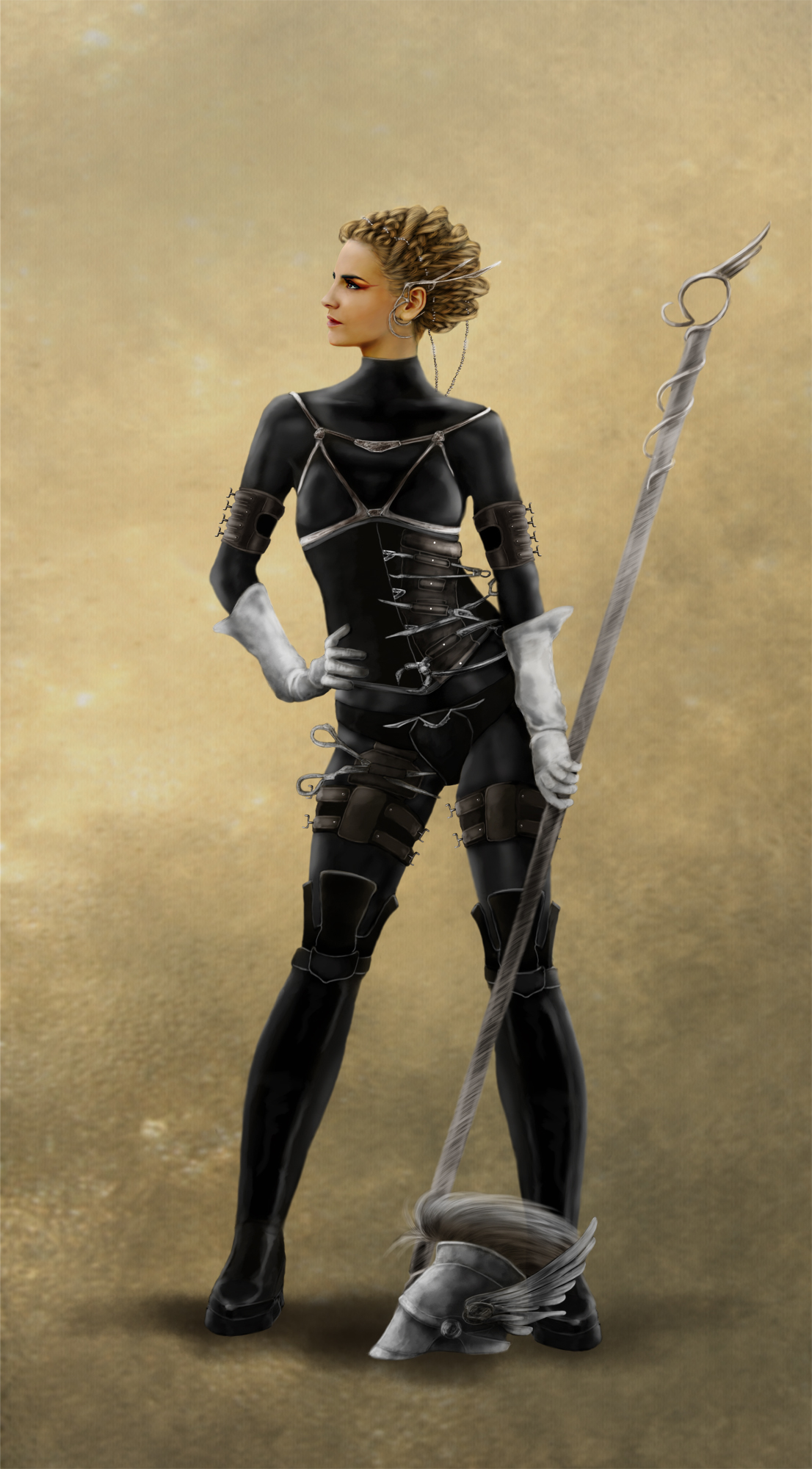
Morgan Jeterix in her Hospitaler uniform (painting by Eve Ventrue)
After nearly being killed in the fire as a girl, Morgan decided that life is precious and was determined to live it by following her heart no matter where it might lead. Her behavior afterwards was shocking by conservative Hala standards, earning her the epithet “Jeterix” which means Unmarried and Unprincipled in Hala. The “Jeterix” tag was normally a mark of shame for a woman in Hala society, but Morgan wore it with pride, officially adding it to her name. Morgan was well-known for her steamy and rather messy love affairs. She was constantly beginning a new relationship and ending an old one: her brief love affair with fellow Hospitaler and ex-Black Hat Bethrael of Moane was an A-List scandal in the city of Bern. Morgan did not confine herself to class, age, station or gender–any who caught her eye was a potential lover. Morgan was seductive and charming, and she had secretly learned the art of Xaphan Tropism (the art of inducing a sexual climax using minimal touches on non-erogenous parts of the body such as the wrists). Her touch was said to be “electric”.

Morgan would eventually teach Private Taara how to fight like a Hospitaler and the secrets of Xaphan Tropism (painting by Fantasio)
When Morgan met Paymaster Stenstrom and his friends Private Taara and Lord A-Ram, that’s when things really got interesting.
copyright 2012, Ren Garcia, Fantasio and Eve Ventrue
Fiend of Calvert Horror/Mystery Anthology is Accepting Submissions
October 10, 2012
The author of the League of Elder series is looking for you! We’re collecting stories for an anthology focused on the Fiend of Calvert, a Jack-the-Ripper style killer featured in LoE Book VI: Sands of the Solar Empire.

Exterior of Fiend Pamphlet (Art by Carol Phillips)
What we don’t want: Stories with excessive profanity, erotica, splatter horror or hate fiction. Illustrations depicting explicit frontal nudity will not be accepted.
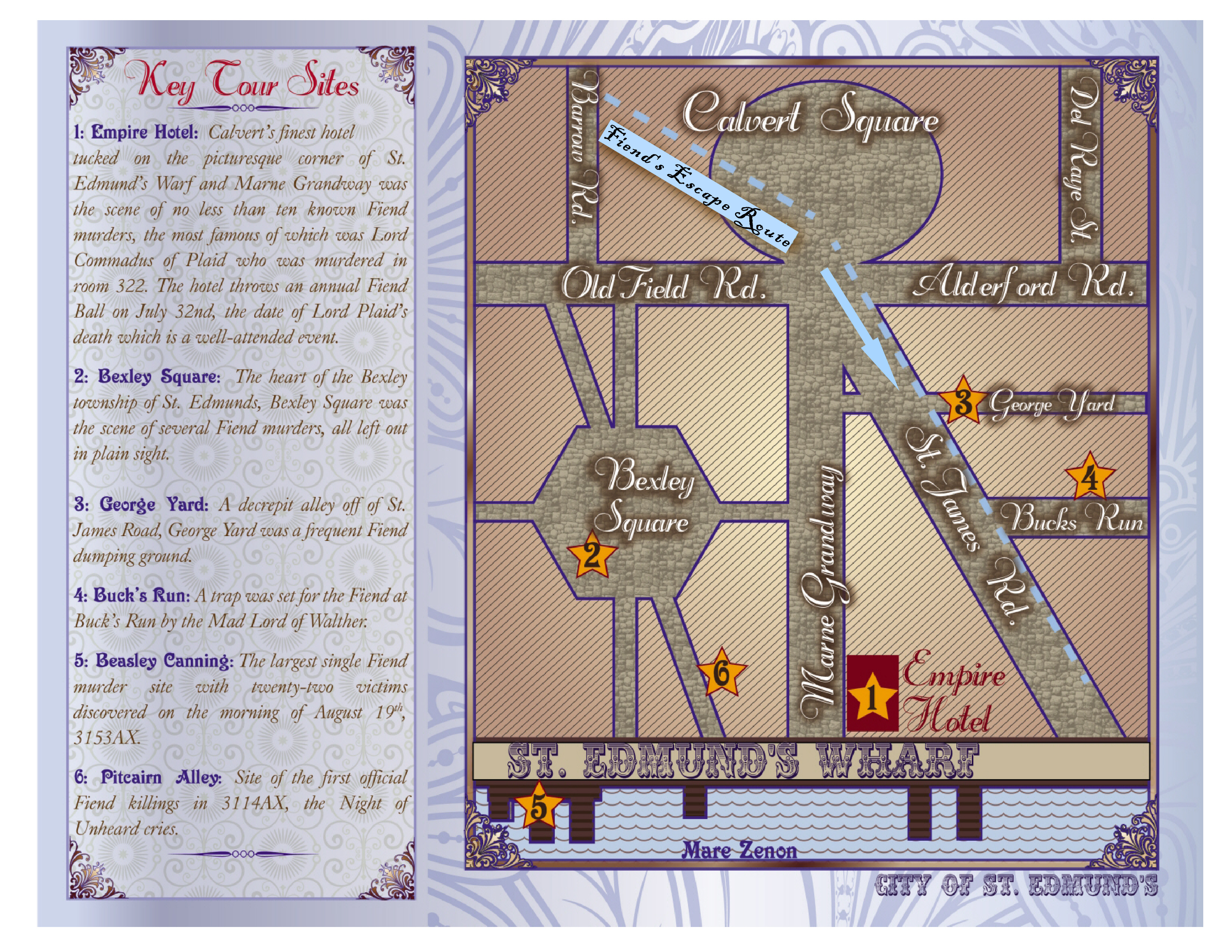
Interior of Fiend Pamphlet (Art by Carol Phillips)

Map of the Calvert Region of Kana
Payment: Payment for accepted submissions will be made in the form of a check within two months of publication. If preferred, payment may be made through a PayPal account. Authors of an accepted short story will be paid at the rate of 1¢ per word, up to a maximum of $100 US for stories and $50 US for poetry.
Rights: We purchase exclusive worldwide print and electronic rights. These rights exist from the point of contract to a period of two years from the date of publication. It is also understood and agreed that Ren Garcia may retain the right to archive the Work for reprinting use only in the anthology format. The author shall retain all other rights to the Work not specified here.
How to submit: Send us via email a short 150 word or less blurb (written in third-person) describing your story along with your planned final word count (approximating is fine) and what sort of story it is (sci-fi, horror, steam punk, etc). Please also include the first few pages so we can get a feel for your writing style. We’re flexible about silly stuff like spacing, font, justification and all that, however, if you turn in an overtly unprofessional submission it probably won’t go very far.
Multiple Submissions: Only one story, or up to 3 poems per author will be considered. Illustrators/artists may submit up to two illustrations. All submissions must be submitted separately (one submission per email).
Simultaneous Submissions: Simultaneous submissions are not permitted due to the fact that the Fiend of Calvert and associated characters/environs are League of Elder trademarks.
Response time: 1-4 months depending on your submission date. Our responses will come in the form of a simple form letter via e-mail.
copyright, 2012, Ren Garcia and Carol Phillips
Carahil’s Daughter
October 4, 2012
As many people know full well, raising a child can be a trying and difficult undertaking. Children can be a veritable bundle of dynamite ready to explode at any moment despite one’s best efforts to diffuse them.

“Atha” by Fantasio
Take Carahil for example. Often considered a child himself, Carahil lost his heart to the Windwalker Mabsornath, the Cat Goddess of Zall 88 and they went off to the top of the Universal Tree and were wed. With marriage came children, seven of them in fact, four girls and three boys. Most of them were somber, thoughtful children, aware and weighed down with the burden and responsibility of being gods and the power the comes with it.
And then there was Atha. The youngest of the lot, Atha was an enigma to her parents in many ways. She most often chose to appear as a human instead of as an animal, as was the usual case: her brothers all appear as various types of seals, her sisters as wild cats. On occasion, Atha does appear as an animal, as a giant black snake, and, rarely, she appears as a cloud of smoke.
Most often, however, Atha chooses to appear as a human of changeable age, sometimes as a mischievous child and other times as a full-grown adult. In fact, she greatly resembles her grandmother, Lady Poe of Blanchefort, appearing tall and thin in a silvery gown and short platinum-blonde hair. Her one distinguishing feature–she always wears a pair of intricate, geared goggles as the ladies on Hoban often wear. The goggles are a constant feature whether Atha appears as a child or an adult, always perched on her nose covering a good portion of her face. Atha’s goggles are huge and protruding, rather like a pair of binoculars made of gold, silver and brass. It has been said that to see her eyes beneath the goggles is to go mad.
Atha shares much in common with her father. Atha keeps her word–if she promises something she follows through. She possesses his whimsy and unpredictable sense of fun and humor. She loves pranks and jokes, however, unlike her father whose pranks are always benign, Atha’s are anything but. She is selfish and self-absorbed, she is flighty as well, given to fits of rage and temper when things don’t go her way. According to various Hertog writings, she has a fascination with Vith heroes, both male and female, putting them through the wringer, literally torturing them (sometimes to death) with adventure and quest occasionally ruining their lives, and then, when she has had enough fun, she takes them into her bed and seduces them. Atha’s wanton promiscuity with the younger folk is well-known. In time, she became known in various pantheons as a goddess of mischief, of sex (and the misfortune of having sex) and questing.
Atha, also taking after her father, also has a habit as masquerading as other out-worldly entities, in particular, an entity known as the Shadow tech Goddess. Why she does such things is not known, though it is assumed such antics are for personal gain.
Carahil, though he loves his daughter, was beside himself and didn’t have a thought as to properly teach her not to do some of the things she often did. His solution to the problem was one many parents often make use of: he found Atha a “babysitter“, one whom he thought would teach Atha virtue and proper manners through deed and example. He therefore “dropped her off” at Castle Blanchefort to be taught by the people there and, with luck, her positive experiences would calm her down a little.
There she came under the tutelage of Maser of Blanchefort, his mentor and lover Laika of Stonebringer Tower, Sebastian of Tusck and Millicent of Blanchefort, a distant cousin of hers.
Would it do her any good–only time will tell.
copyright 2012, Ren Garcia and Fantasio
SOTSE Characters: Lady Alesta of Dare
September 28, 2012
Lady Alesta of Dare is a girl of Barrow stock hailing from the western city of the same name. The Dares are the largest extended family on Kana with over sixty percent of people of Barrow stock being Dares.
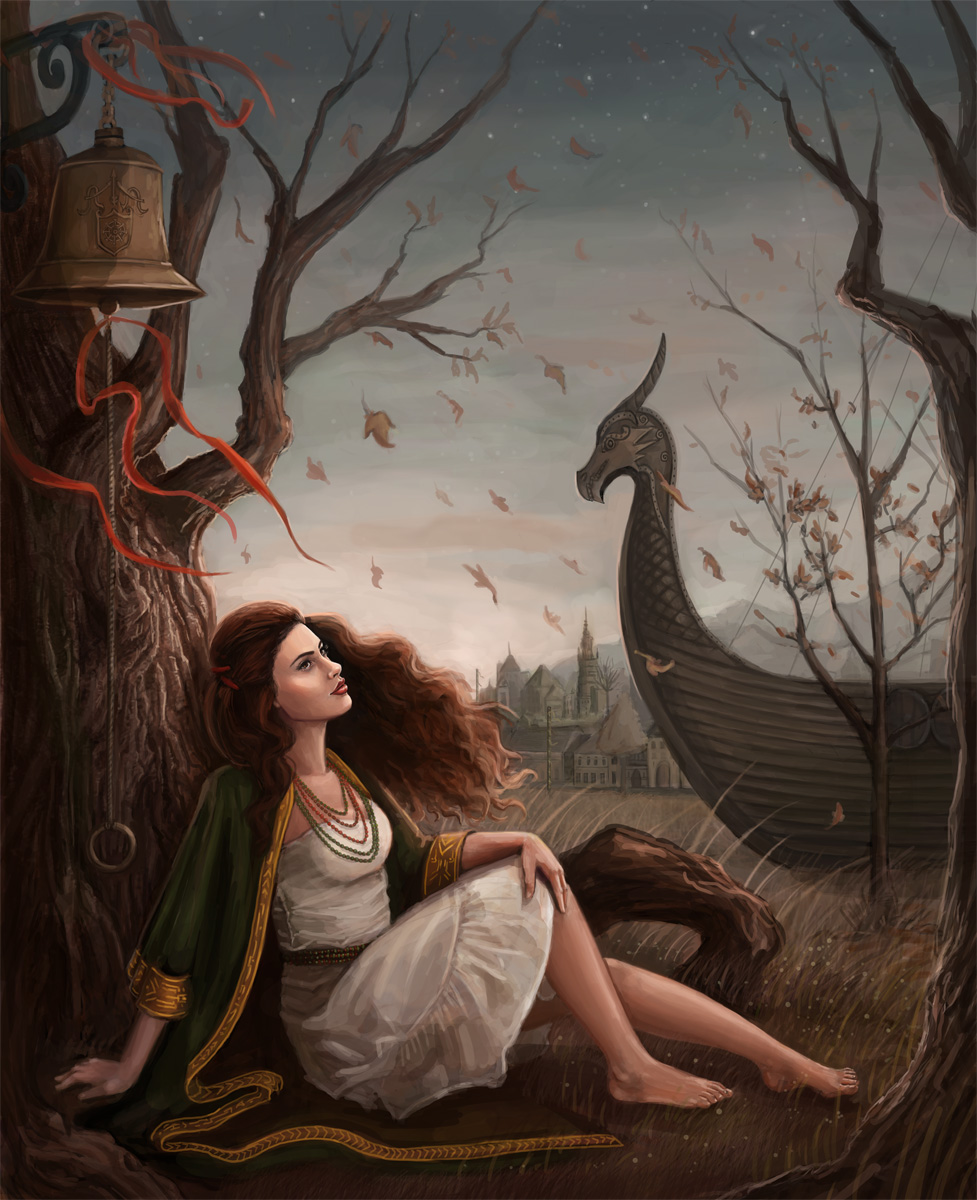
“Lady Alesta of Dare” by Kayla Woodside
When visiting the marketplace with her mother, she often saw a group of apparently impoverished beggars being harassed in the town square by gawkers. She asked her mother who the beggars were and her mother told her: “Pilgrims of Merian,” and she said nothing more, hurrying on.
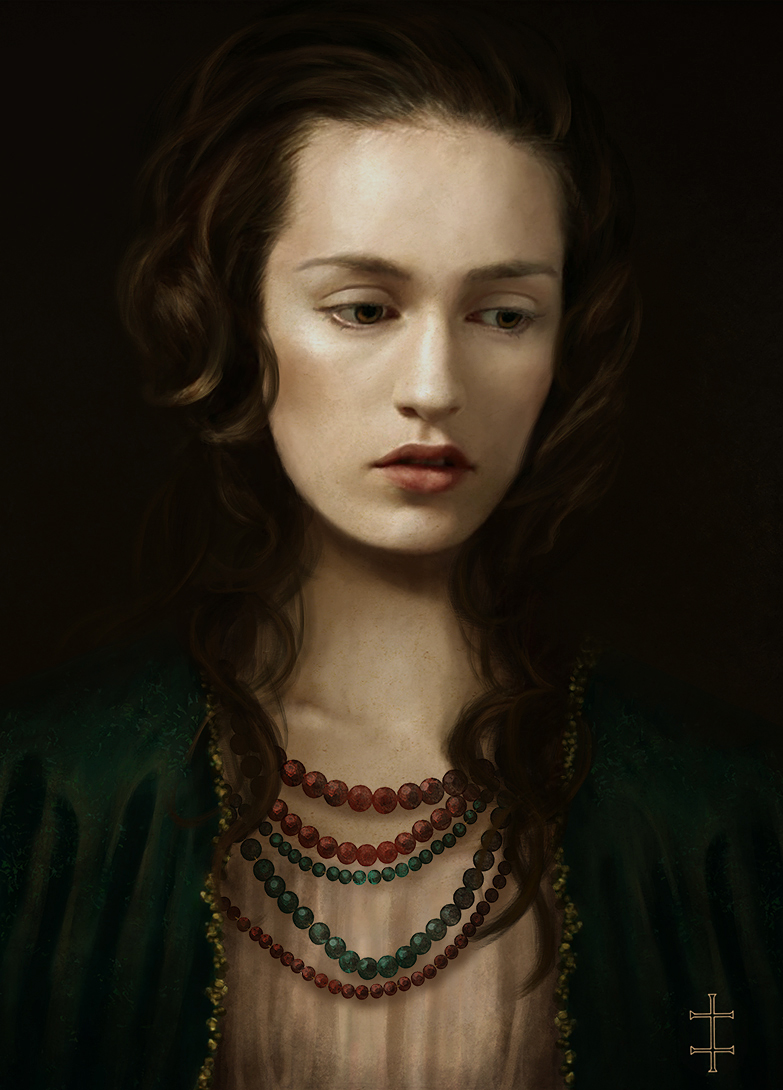
“Alesta” by Eve Ventrue
One day, she stopped to listen to what the Merians were saying. They said, amid the jeers, that the Elders were not gone, and to see them one need only open one’s eyes. The Merians mentioned their Star–a yellow star to the west. The people listening to them laughed. What star, they asked. There is nothing there.
“I see it!” Alesta cried. The Merians turned to her and she pointed right toward it.
Though her family protested, Alesta had found her calling. She left her family in Dare and set out, traveling in the meager wagons of the Pilgrims of Merian. She quickly discovered that there was much more to the Merians than they let on to the public. They took her to a sacred mountain to pray and discover her path. She knelt in the snow at the summit for hours waiting to hear the yellow star speak.
At last, she heard a kind voice whisper in her ear: “Save all those who fall astray.”
Alesta on the Merian Ship (From LoE Book VII cover, by Carol Phillips)
Though threadbare and impoverished, her star protected her. She wore a belt that allowed her to walk invisibly if she so wished and had beads that shielded her mind from attack.
She eventually ended up on a small outpost overlooking a watery world of evil unknown to the Sisters or the Fleet, hiding right under their noses where the unwary were lured in and killed. It was very dangerous, and should she and her Merian order be discovered by the caretakers of this world, there would be no mercy and no help for them. As always Alesta and the Merians were on their own in a dangerous world.
One day, she saw a star fall, and that was beginning of the end …
copyright 2012, Ren Garcia, Eve Ventrue, Carol Phillips and Kayla Woodside
TOTSE: The Pilgrims of Merian
September 2, 2012

Sketch of the cover to LoE Book VII “Against the Druries” featuring a Merian ship attempting to rescue the wreck of the Demophalon John (Carol Phillips)
The chief tenet of their teachings is that the Elders of Old are not gone, only relocated. They believe in the Star of Merian, the astral presence of the Elder Merian thought to be long dead. They say those with clear sight can see the Star of Merian as a great yellow star, easily visible in broad daylight, and that it is wreathed in a twisting red cloud. A prerequisite to joining the order is to be able to see the star.
The Merians travel the countryside by way of floatwagons covered with tarpaulins. They have no known permanent headquarters and make a meager living selling hand-made trinkets and cloth and performing calligraphy (see below). When asked where they come from, the Merians always say “Westwood“, though such a place has never been located. Occasionally, the Merians will stop and settle in one place for a year or two. They often ask the local Lord or Lady permission to settle, and, when granted, build a temporary village called a Hermitage. The estate of Belmont-South Tyrol resides on the grounds of an old Merian Heritage. Though they are impoverished in the extreme, those who enter a Merian Hermitage are welcome to share in anything they have.

“Lady Alesta of Dare and Pilgrim of Merian” by Eve Ventrue
Though threadbare and impoverished, it is said in some quarters that the Merians are much more capable and advanced than they let on. Some say that their belts allow them to pass unseen if they wish, and their beaded necklaces shield the wearer’s mind from attacks and illusion. There is also the various tales that the Merians may travel virtually anywhere they wish at the blink on an eye via an arcane bridge called The Merian’s Road. Xaphan Traders often tell tales of selfless, green-robed people who walk into peril to rescue those in need and that they travel by way of a “Road” wreathed in fog.
Such tales have never been verified and the Merians themselves never speak of such things.
copyright 2012, Ren Garcia, Eve Ventrue and Carol Phillips.
 The Temple of the Exploding Head